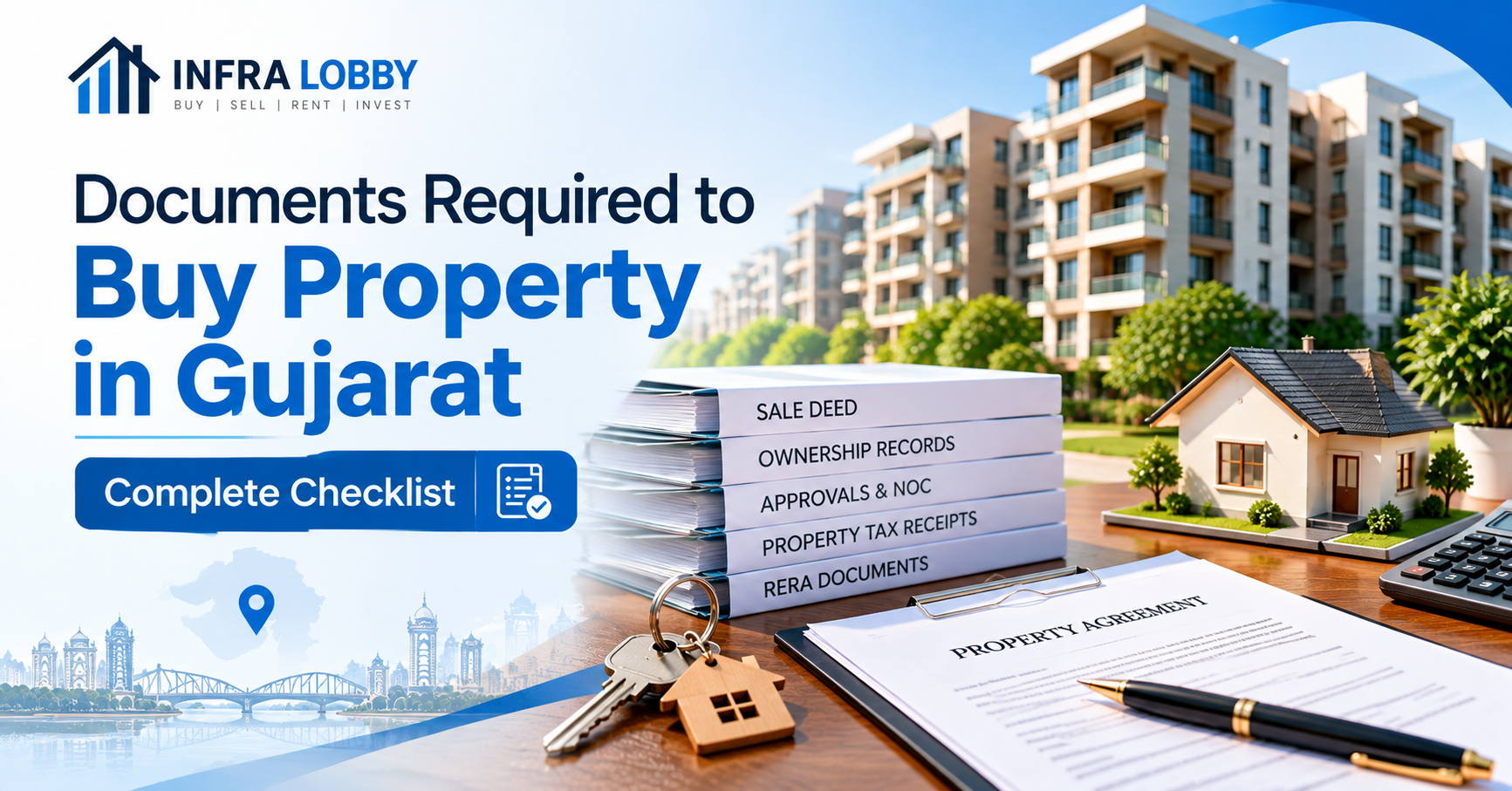
Buying property is an exciting milestone, but overlooking important paperwork can lead to legal complications, unexpected expenses, or ownership disputes. Whether you are purchasing your first apartment, an independent house, or a residential plot, checking the right documents is essential.
If you are planning to buy property in Gujarat, understanding the legal requirements before making a payment can help you make a more confident decision. This guide explains the essential documents, verification steps, and precautions every property buyer should know.
Why Is Property Document Verification Important?
Property documents establish ownership, confirm legal approvals, and help identify outstanding loans or disputes. Without proper verification, buyers may unknowingly purchase property with unclear ownership or unresolved financial liabilities.
For example, someone searching for a 1 bhk house in Ahmedabad should examine more than the property's location, price, and amenities. The ownership records, building permissions, and seller's authority to transfer the property are equally important.
A qualified property lawyer can help identify issues before you sign an agreement.
Essential Documents Required to Buy Property in Gujarat
1. Sale Deed
The sale deed is one of the most important documents in a property transaction. It records the transfer of ownership from the seller to the buyer.
Before registration, check that the document correctly mentions the buyer's and seller's names, property description, agreed consideration, and transaction conditions.
2. Mother Deed and Previous Ownership Records
The mother deed and earlier ownership documents help establish the property's ownership history.
These records allow buyers to understand how the property changed hands over time. Missing documents or unexplained transfers should be examined by a legal professional.
3. Encumbrance Certificate
An Encumbrance Certificate helps identify registered transactions and certain financial charges associated with a property during a specified period.
It can reveal important information about mortgages or previous transfers. However, it may not capture every possible legal claim, so additional verification remains necessary.
4. Property Card or 7/12 Extract
Land records are particularly important when purchasing plots or independent properties.
In Gujarat, the 7/12 extract and related revenue records provide information about rural land. Urban properties may require a property card or relevant city survey records.
Buyers can check available information through the official Gujarat land records portal, AnyROR.
5. Approved Building Plan
When buying a flat or newly constructed house, request the approved building plan from the seller or developer.
Compare the approved layout with the actual construction. Unauthorized additions or major deviations may create difficulties during future transactions.
6. Building Use Permission
Building Use (BU) Permission is an important document for completed buildings where applicable.
It helps establish whether the building has the required authorization for its intended occupancy. Buyers should verify its availability with the appropriate local authority.
7. RERA Registration Details
For projects covered under the Real Estate (Regulation and Development) Act, verify registration through the official Gujarat RERA portal.
Check the developer's details, registered project information, declared completion schedule, and available project updates.
Remember that RERA registration does not replace independent legal due diligence.
8. Property Tax Receipts
Ask the seller for recent property tax payment receipts.
These help identify outstanding municipal dues and allow buyers to compare property details with local authority records.
9. No Objection Certificate
A No Objection Certificate (NOC) may be necessary depending on the property type, society rules, financing arrangements, or applicable authority requirements.
For resale apartments, check whether the housing society has any outstanding dues or transfer-related requirements.
10. Identity and Address Proof
Buyers and sellers generally need valid identification during registration.
Commonly requested documents include PAN cards, accepted identity and address proofs, photographs, and identification documents for witnesses.
Confirm the exact requirements with the relevant Sub-Registrar's office before your appointment.
Additional Documents for Different Property Types
Not every property requires identical paperwork.
For resale flats: Check previous sale deeds, society documents, maintenance dues, existing mortgages, and applicable occupancy permissions.
For residential plots: Verify survey details, land-use classification, access rights, layout approvals, and non-agricultural permission where applicable.
For under-construction properties: Review RERA details, approved plans, the agreement for sale, payment milestones, and the developer's commitments.
Buyers working with Ahmedabad real estate agents should still independently verify documents instead of relying entirely on verbal assurances.
Property Registration Process in Gujarat
Once the documents are reviewed and the transaction terms are agreed upon, the parties can proceed with registration.
The usual process involves preparing the sale deed, determining applicable stamp duty and registration charges, completing required payments, and presenting the documents before the appropriate Sub-Registrar.
After registration, buyers should securely retain the registered deed and follow the applicable procedure for updating revenue or municipal ownership records.
Stamp duty, fees, and procedural requirements may change, so confirm current details through official channels.
Common Mistakes Property Buyers Should Avoid
Many property disputes arise because buyers rush through documentation.
Avoid paying a substantial amount before checking ownership, ignoring existing mortgages, accepting incomplete approvals, or signing documents without understanding their terms.
Also, verify that the property description, measurements, and seller details match across records.
Final Property Buying Checklist
Before completing your purchase, confirm that:
The seller has a clear and transferable title.
Previous ownership documents have been reviewed.
Land records match the property's details.
Applicable building and project approvals are verified.
Outstanding loans, taxes, and society dues are checked.
The sale deed is reviewed before registration.
A property lawyer has examined potential legal risks.
Conclusion
Understanding the documents required to buy property in Gujarat is an important step toward a safer real estate transaction.
Whether you are exploring homes in Ahmedabad, residential plots in Vadodara, or apartments in Gandhinagar, careful verification helps protect your investment.
Explore available property listings on Infra Lobby, compare suitable options, and complete the necessary legal checks before making your final decision.